
As we age or face health challenges, maintaining independence and comfort becomes increasingly important. Many individuals and families struggle with balancing daily responsibilities, medical care, and emotional support. This is where an in home health care service can make a profound difference. By offering professional assistance directly in the comfort of one’s home, these services enhance quality of life, provide peace of mind for families, and allow clients to maintain dignity and independence.
Personalized Care in a Familiar Environment
One of the most significant advantages of an in home health care service is the personalized attention it provides. Unlike hospital or nursing home settings, in-home care allows healthcare professionals to tailor their services to the specific needs and routines of each client. This might include medication management, mobility support, meal preparation, or assistance with bathing and dressing.
Being in a familiar environment also reduces stress and anxiety for patients. Research shows that individuals recover faster and experience fewer behavioral issues when they receive care at home compared to institutional settings. By integrating daily routines with professional assistance, an in home service ensures that clients feel safe, valued, and comfortable in their own space.
Another important benefit is the flexibility of scheduling and care intensity. In-home health care can be adjusted to match a client’s changing needs, whether they require full-time supervision or just occasional support. This adaptability allows families to maintain their loved ones’ independence while still ensuring they receive professional attention when necessary, reducing the burden on family caregivers.
Additionally, in-home care promotes stronger emotional connections between clients and caregivers. Consistent one-on-one interaction allows caregivers to understand not only the physical needs of their clients but also their preferences, habits, and emotional states. This deeper understanding fosters trust and companionship, which can improve overall mental health and contribute positively to the client’s quality of life.
Emotional and Social Benefits
Physical care is essential, but emotional and social support plays an equally important role in overall well-being. Loneliness and social isolation are common among seniors and people with chronic conditions, often leading to depression or decreased cognitive function. An in home health care service helps bridge this gap by providing companionship alongside medical assistance.
Caregivers often engage clients in meaningful conversations, activities, and hobbies that stimulate the mind and lift spirits. They also coordinate social outings or visits with family and friends, helping clients maintain social connections. This emotional support contributes to a higher quality of life, reducing stress and promoting a sense of belonging.
Moreover, family members can experience relief knowing their loved ones are receiving consistent, compassionate care. They no longer have to worry about whether their loved one is safe, comfortable, or taking medications properly. The peace of mind offered by an in home service cannot be overstated—it allows families to focus on quality time rather than constant supervision and worry.
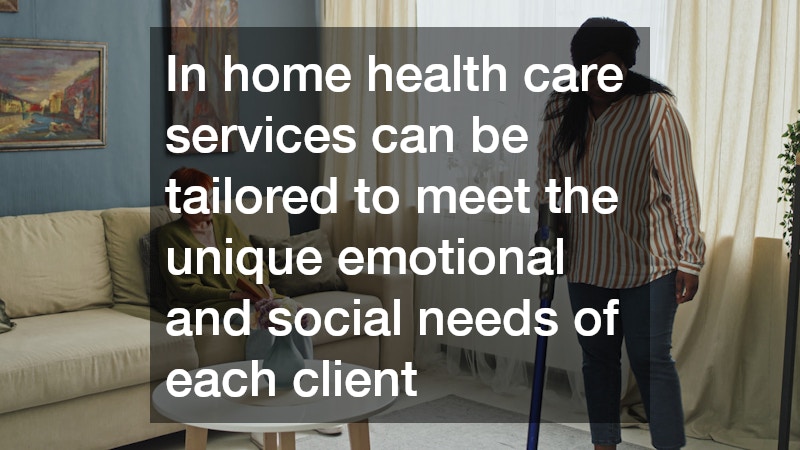
In addition, in home health care services can be tailored to meet the unique emotional and social needs of each client. Care plans often include personalized activities, from light exercise and arts and crafts to book clubs or virtual events, which encourage engagement and a sense of accomplishment. By addressing not just physical health but also personal interests and social preferences, caregivers help clients maintain autonomy and dignity, fostering a more fulfilling and balanced daily life.
Promoting Independence and Physical Health
Maintaining physical health and independence is another critical benefit of an in home health care service. Skilled caregivers provide assistance with exercises, mobility, and daily living activities that clients might otherwise struggle to perform alone. This support not only prevents injuries and complications but also encourages clients to stay active and engaged.
For individuals with chronic conditions or recovering from surgery, in-home care ensures that health routines are followed precisely. Caregivers can monitor vital signs, track medications, and communicate with doctors to ensure a seamless continuity of care. This proactive approach prevents hospital readmissions and allows clients to enjoy a higher level of independence for longer.
Additionally, in-home care can be customized to match changing health needs. Whether a client requires round-the-clock assistance, intermittent care, or specialized nursing services, an in home health care service adapts to meet these requirements. This flexibility ensures that clients receive exactly the level of care necessary without compromising their lifestyle or personal preferences.
An in home health care service offers more than just medical support—it improves quality of life in tangible ways. By combining personalized care, emotional support, and assistance with daily living activities, it allows clients to remain in their homes, maintain independence, and enjoy a higher sense of well-being. Families benefit from reduced stress and the assurance that their loved ones are safe and cared for.
In today’s fast-paced world, where health challenges can often feel overwhelming, the value of professional in-home assistance cannot be underestimated. For those seeking comfort, dignity, and holistic care, an in home health care service is a vital resource that makes life not just manageable, but truly enjoyable.